Tutoring Plus+
A Pathway to Deeper Learning and Increased Success
Tutoring Plus+
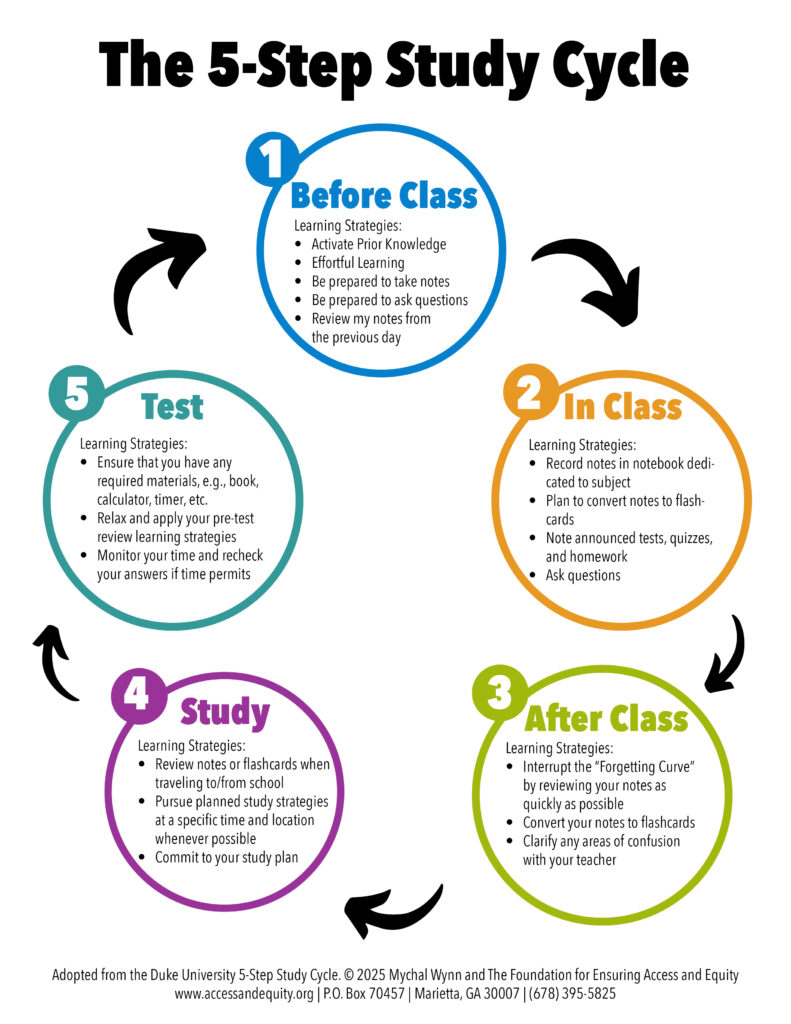 Traditional tutoring, focused exclusively on problem-solving, has proven marginally successful for millions of students. Mychal and Nina Wynn developed Tutoring Plus+ based on the neuroscience of learning to assist students in not only successfully solving problems in a single subject, but becoming successful students across all subjects. Our approach, as reflected in The Study Cycle illustration adopted from Duke University, begins with getting to know students and their aspirations, and collaborating with students to identify high value study skills and learning strategies they are willing to incorporate into each step of the study cycle.
Our approach has proven to:
- Increase student efficacy through daily routines; planned note-taking strategies; and timed at-home study
- Inspire intrinsically motivated and more engaged learners
- Increase student classroom engagement and test preparation
- proficiency in applying research-based learning strategies
Proven results:
- Increased classroom engagement and better note-taking
- Improved grades and increased self-confidence
- Higher test scores (e.g., AP, PSAT, SAT, or ACT)
In 2025, we created a student-led AP Study Group Program in response to disappointing data reported by the CollegeBoard (AP National and State Data).
The report notes:
Each AP Exam question is psychometrically screened for bias, so unsurprisingly, research finds that students of each racial/ethnic group earn similar scores on AP Examinations if they enter the AP class with similar academic preparation. But because there are substantial and enduring disparities in preparation for advanced academic classes, the annual AP Exam results show significant differences in AP Exam scores. Academic resources and opportunities in earlier grades are critical to shifting these results; the Pre-AP Program is one emerging approach to providing a wide range of students with preparation for advanced coursework.
Key findings:
- In 2025, Black students earned 179,490 credit-qualifying AP Exam scores, 117% more than in 2015, with a mean score of 2.5.
- In 2025, Latino students earned 685,598 credit-qualifying AP Exam scores, 139% more than in 2015, with a mean score of 2.7.
- In 2025, Asian students earned 792,993 credit-qualifying AP Exam scores, 103% more than in 2015, with a mean score of 3.6.
- In 2025, White students earned 1,608,177 credit-qualifying AP Exam scores, 26% more than in 2015, with a mean score of 3.4.
In response to this data, our AP Study Group created an online community of students from Alabama, Florida, Georgia, and South Carolina, who joined to learn, volunteer to tutor, or supported our efforts to reach more students. As a result of these efforts, all participating students earned an average score of 4 on their AP exams.
Following is the overall AP exam performance of participating students:
- AP Calculus BC – 5
- AP Calculus AB Subscore – 5
- AP Chemistry – 5
- AP Biology – 3
- AP English Language – 3, 4
- AP Precalculus – 4, 4
- AP Spanish Language – 5
- AP US History – 4, 4
- AP World History – 4
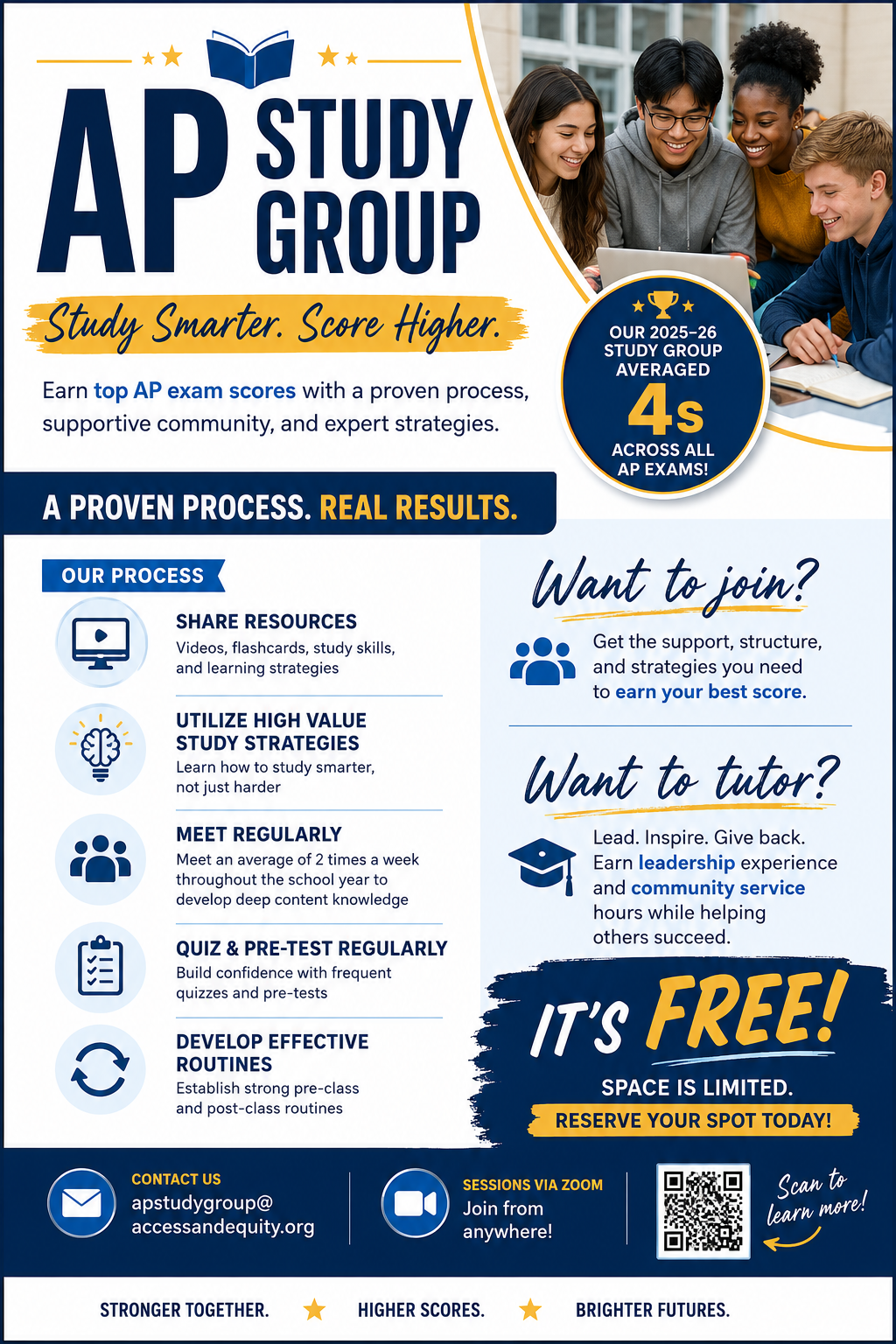 AP exam support is only one component of our comprehensive approach to college planning. Students in our College Planning Cohort program are applying study skills and learning strategies that allow them to take rigorous classes, earn top grades, and earn top PSAT, SAT, and ACT scores, resulting in their being offered admission to top colleges and being awarded high dollar scholarships. Whether students are preparing for class exams, EOC tests, PSAT, SAT, ACT, IB, or AP exams, study skills and learning strategies are essential to maximize learning from classroom instruction, test prep, or tutoring. In its most simplistic form, learning strategies reflect what a student does in the moment, i.e., when receiving instruction from a teacher or tutor, followed by what a student does in their own time, i.e., when the student is studying. While the strategies utilized may vary by student, effective strategies must be identified for each student.
The ACT scores reflected below were attained by one of our students diagnosed with ADHD. Rather than viewing the diagnosis as an insurmountable obstacle, the student viewed the diagnosis as simply requiring that she develop an effective study skills and learning strategies plan.
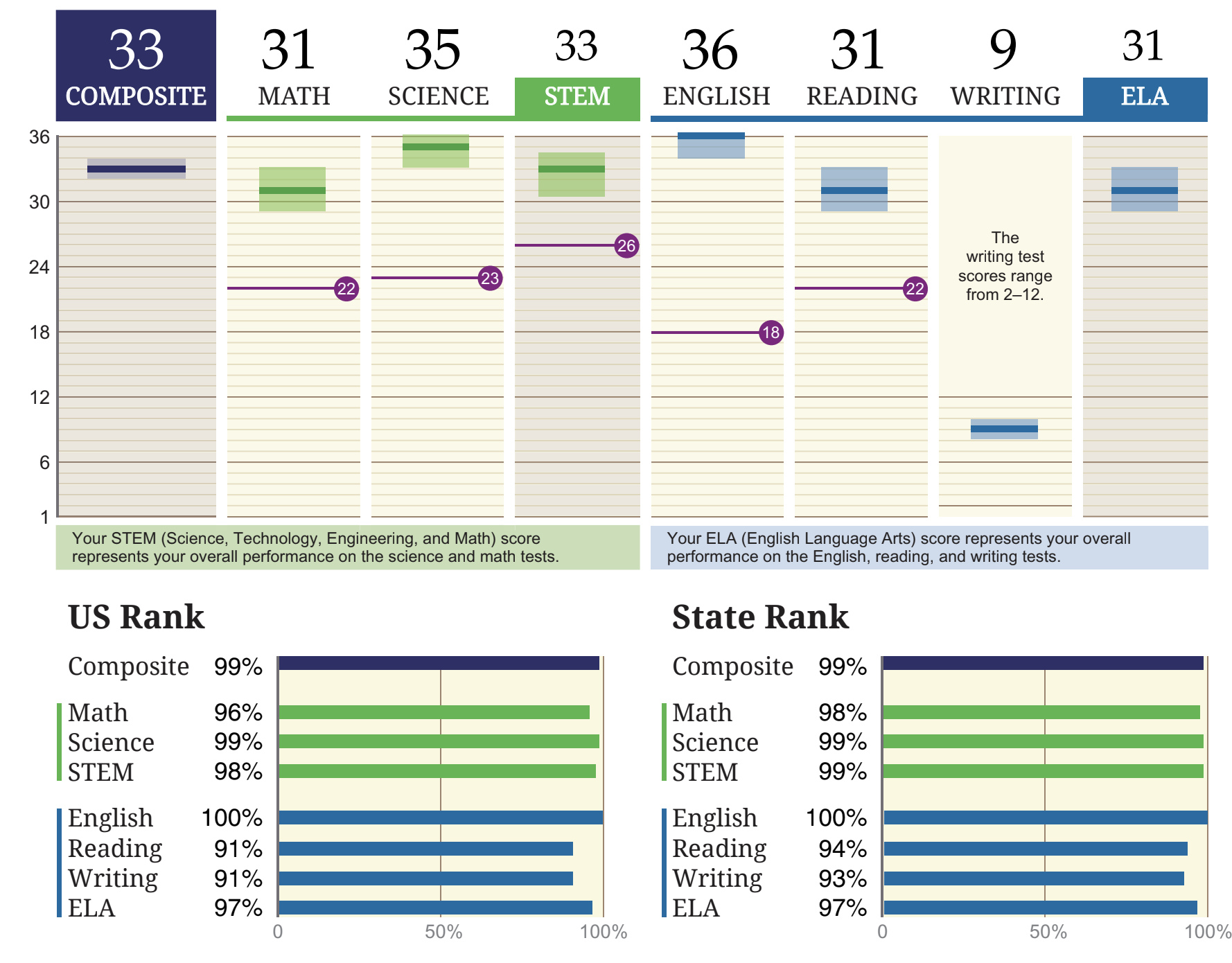
In addition to earning ACT scores consistently above the 90th percentile, the student scored perfect 5s on all 9 of her AP exams, which included AP Calculus AB and AP Statistics. These results were not by accident or the result of wishful thinking, but the result of persistent effort.
Effortful Learning and Desirable Difficulty Matter
Effortful Learning is a mental workout. The more effort you put into your workout, the more muscle you build. Desirable Difficulty is ensuring that your workout is difficult. As your biceps, chest, and triceps grow as a result of strenuous workouts, so too, does your brain. These are the fundamental principles of learning. The effort and the difficulty involved in learning helps to build stronger memories in a manner similar to building stronger muscles. (p. vii)
No student needs to be a struggling learner when there is a plethora of brain-based study skills and learning strategies from which to choose. For example, in the following video, an instructor from the Columbia Teacher’s College provides insight into the learning process and the importance of taking action to become a more effective thinker and learner.
Click here to sign up today or submit the following form to schedule a meeting to discuss your student’s needs.